Safe Days For Not Getting Pregnant Cycle Myths
- 1.
What Even Are “Safe Days” Anyway? Demystifying the Calendar Conundrum
- 2.
Why Your Cycle’s About as Reliable as British Wi-Fi
- 3.
Ovulation Isn’t a Stopwatch—It’s a Plot Twist
- 4.
The “Safe” Zone Myth: Before, During, or After Your Period?
- 5.
Fertility Awareness Methods: More Art Than Science
- 6.
When “Low Chance” Isn’t “No Chance”
- 7.
Why Relying Solely on Calendar Math Is Risky Business
- 8.
Periods That Play Hide-and-Seek (and Why That Matters)
- 9.
The Emotional Weight of “Almost Safe”
- 10.
Wrapping It All Up Without Actually Wrapping It Up
Table of Contents
safe days for not getting pregnant
What Even Are “Safe Days” Anyway? Demystifying the Calendar Conundrum
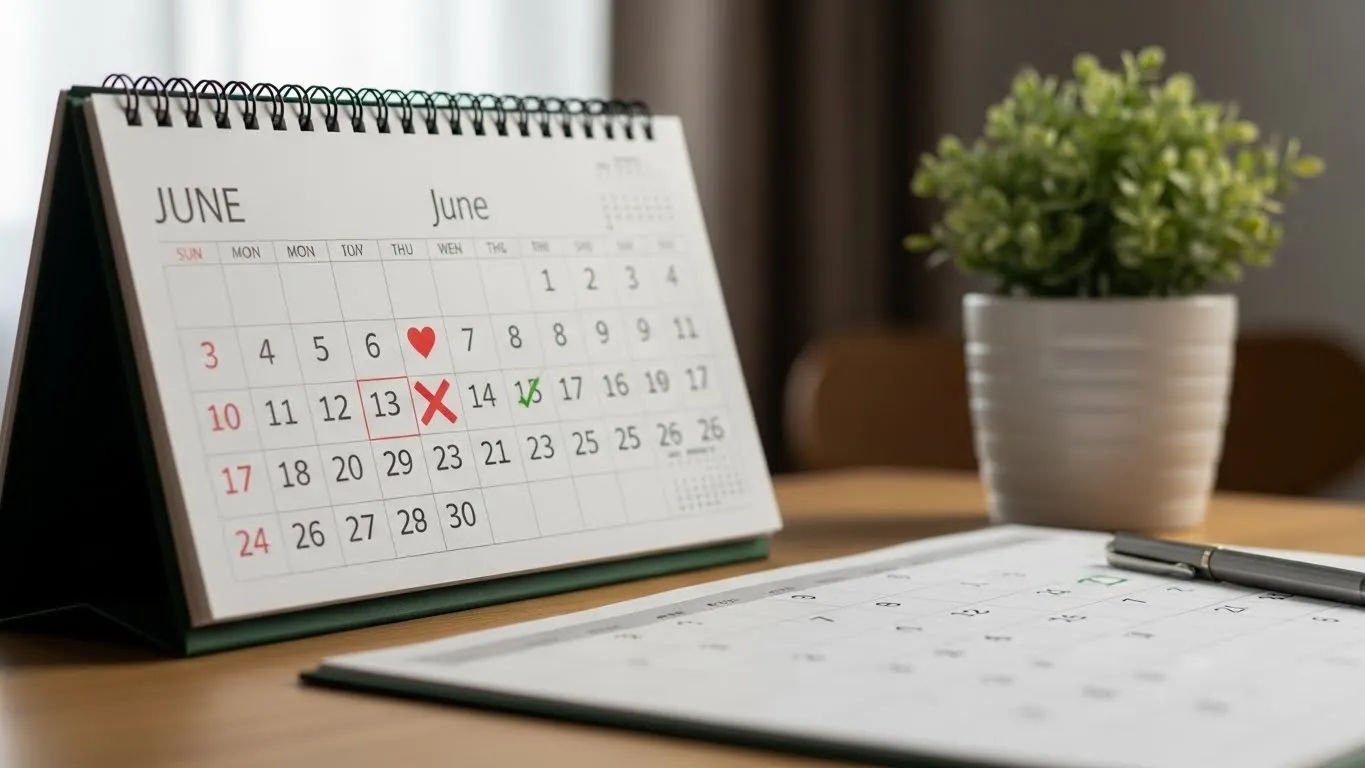
Ever caught yourself muttering, “Right, so… when’s the safe days for not getting pregnant again?” while scrolling through your Notes app like it’s a sacred oracle? You’re not alone, mate. Loads of folks think the menstrual cycle’s just a neat little loop you can tick off like a Tesco shopping list—but biology’s a cheeky bugger and rarely sticks to schedules. The idea of “safe days for not getting pregnant” hinges on the rhythm method, a kinda-old-school approach that assumes ovulation’s as predictable as Big Ben chiming. Spoiler: it’s not. Hormones do their own freestyle jazz, and stress, travel, or even a dodgy takeaway can throw your cycle proper out the window. So while folks chat about “safe days for not getting pregnant” like it’s gospel, the truth’s more “maybe-ish” than “definitely-nae.”
Why Your Cycle’s About as Reliable as British Wi-Fi
Let’s be real—pinning your hopes on the safe days for not getting pregnant is like trusting your kettle to boil just once. Human cycles? They wobble. The average cycle’s pegged at 28 days, but “average” is about as helpful as a chocolate teapot if your own runs 21 or 35 days. Ovulation typically kicks in roughly 14 days before your next period—but if your period’s late (again), good luck guessing when that was. That wobble means your so-called “safe days for not getting pregnant” might actually be peak baby-making territory. One study even found that only 12% of women ovulate exactly on day 14. So if you’re banking on calendar math like it’s GCSE revision, you might wanna rethink that strategy—unless you’re cool with surprise bundles of joy.
Ovulation Isn’t a Stopwatch—It’s a Plot Twist
Here’s the kicker: sperm are proper ninjas. They can survive inside the body for up to five days, just biding their time like they’re waiting for the kettle to boil. So if you think you’re safe three days before ovulation? Nah, love—you might’ve already let the party crashers in. That’s why the safe days for not getting pregnant window shrinks faster than a jumper in a hot wash. Even if your period just ended, and you’re thinking “I’m golden,” you could be ovulating early—especially if your cycle’s short. And ovulation predictor kits? Helpful, sure, but not foolproof. They measure hormones in your pee, not whether your fallopian tubes are throwing a rave tonight. Bottom line: the notion of “safe days for not getting pregnant” gets muddier the closer you look.
The “Safe” Zone Myth: Before, During, or After Your Period?
Loads of folks reckon the days right after your period are “safe.” And technically? *Sometimes*. If you’ve got a textbook 28-day cycle and ovulate like clockwork on day 14, then days 1–7 might be low-risk. But—and this is a massive “but”—if your cycle’s 21 days (which is totally normal), you could be ovulating on day 7. Which means having a cheeky romp on day 5? You’re in the danger zone, my friend. Same goes for “after your period”—if you bleed for five days and ovulate on day 10, those post-period cuddles could land you in bump territory. So while people ask, “How many days before and after a period is safe for pregnancy?” the honest answer is: not reliably. The safe days for not getting pregnant simply don’t exist in a universal sense—they’re personal, wobbly, and best not trusted without backup.
Fertility Awareness Methods: More Art Than Science
Some swear by fertility awareness methods (FAMs)—tracking basal body temp, cervical mucus, and calendar dates like it’s their job. And yeah, if you’re meticulous, tech-savvy, and your cycle’s as stable as a pub stool, FAMs *can* work. But even then, the typical-use failure rate hovers around 24%. That means nearly 1 in 4 relying on safe days for not getting pregnant via FAM end up pregnant within a year. Not exactly comforting if you’re trying to avoid a mini-you just yet. Plus, let’s be honest—how many of us remember to take our temperature before we’ve had our morning cuppa? Life’s messy, and biology doubly so. So while tracking can give you insight into your body, don’t treat it like a contraception condom.
When “Low Chance” Isn’t “No Chance”
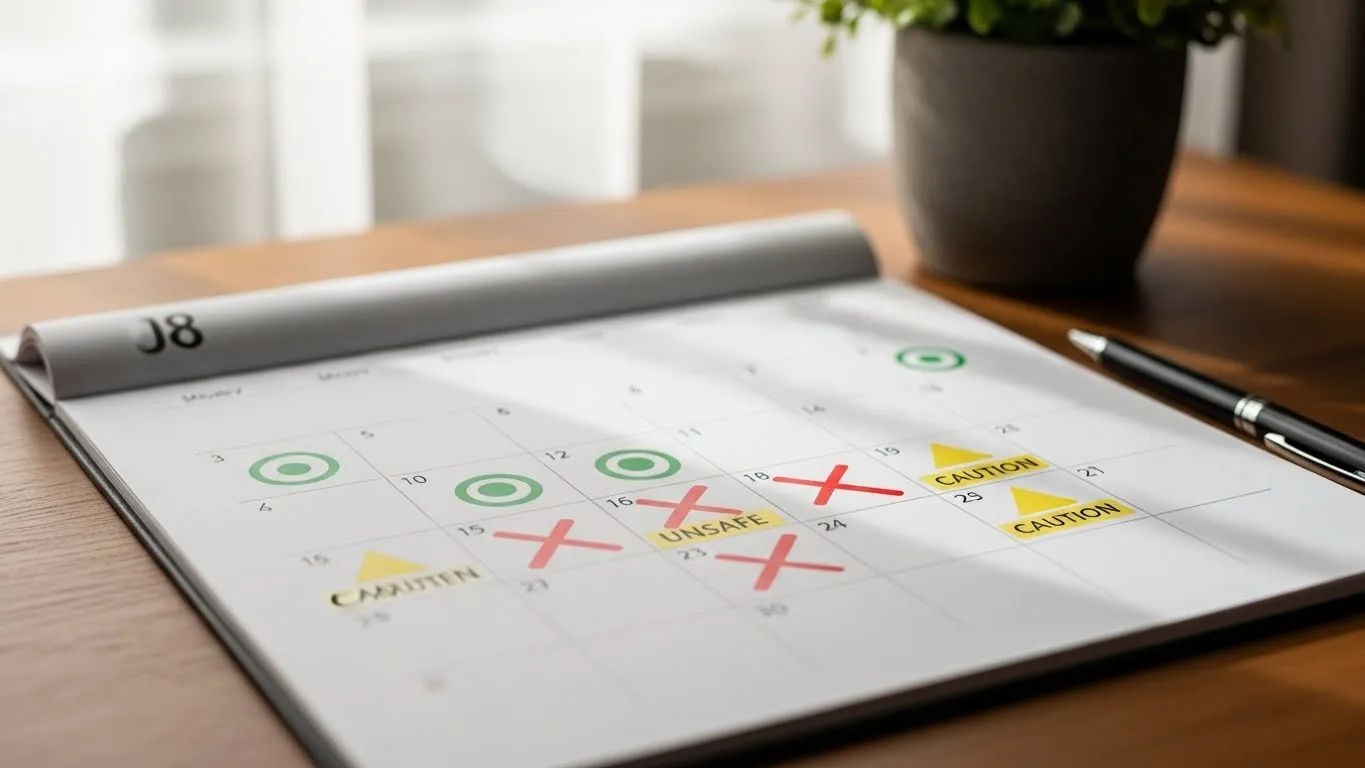
People often ask, “What days are the lowest chance of getting pregnant?” And sure—your period days (especially the first few) are generally lower risk. But “lowest” ≠ “zero.” We’ve heard tales of folks getting preggers on day 2 of their bleed. Rare? Absolutely. Impossible? Nope. Sperm’s longevity plus early ovulation equals a roll of the dice. So if you’re hunting for the safe days for not getting pregnant like it’s a treasure map, remember: even X marks the spot might lead you to a surprise instead of silver. Biology loves a plot twist, and your cycle’s no exception.
Why Relying Solely on Calendar Math Is Risky Business
The rhythm method—aka counting days to find your safe days for not getting pregnant—was big before the Pill dropped in the 60s. But even back then, folks knew it was dodgy. Modern docs don’t really recommend it as a solo act unless you’ve got rock-solid cycles and military-level discipline. And let’s face it—most of us are juggling work, dodgy sleep, and the emotional toll of watching the kettle boil for five minutes. Stress alone can delay or trigger ovulation, making your carefully colour-coded calendar about as useful as a soggy crisp packet. So if you’re serious about dodging pregnancy, pairing calendar tracking with another method—like condoms or a copper coil—is the smart play.
Periods That Play Hide-and-Seek (and Why That Matters)
Irregular periods? You’re not broken—you’re just human. But they do make the whole “safe days for not getting pregnant” gig near impossible. If your cycle hops between 25 and 38 days like it’s on a trampoline, ovulation’s a moving target. And spotting or breakthrough bleeding? That can trick you into thinking you’ve had a period when you haven’t ovulated yet—or worse, you’ve already ovulated and are bleeding for other reasons. Confusing? Bloody right it is. So if your flow’s as predictable as the British weather, maybe don’t bet your contraception on it. After all, “safe days for not getting pregnant” need predictability—and irregular cycles laugh in the face of predictability.
The Emotional Weight of “Almost Safe”
Let’s not gloss over it: stressing over safe days for not getting pregnant can take a toll. Imagine lying awake wondering if that snog on Tuesday was during your “fertile window” or not. The anxiety’s real, and the stakes feel massive. Unlike popping a pill or fitting a coil, calendar-based methods demand constant vigilance—and that mental load? It’s heavy. For some, that pressure’s enough to ditch the method altogether. And honestly? Fair enough. Your peace of mind matters. If tracking your cycle feels like doing your taxes every fortnight, maybe a more hands-off method’s worth considering. Because “safe days for not getting pregnant” shouldn’t cost you your sanity.
Wrapping It All Up Without Actually Wrapping It Up
So—what *is* the safest cycle to not get pregnant? Well, there isn’t one. Every body’s different, every cycle’s a story, and “safe days for not getting pregnant” are less a rule and more a rough sketch. If you’re keen on natural methods, combine tracking with barrier protection or chat with your GP about long-acting options. And hey—if you’ve had a period that came early and you’re wondering “Am I preg?”—you’re not alone. Loads wrestle with that uncertainty. For deeper dives, swing by Amana Parenting, browse the Pregnancy section, or check out our piece on Period Came 1 Week Early Am I Pregnant Possibilities. Knowledge is power—but peace of mind? That’s priceless.
Frequently Asked Questions
How do I know my safe days to avoid pregnancy?
You can *estimate* your safe days for not getting pregnant by tracking your cycle length and ovulation signs—but it’s not foolproof. Apps and calendars help, but sperm survival and irregular ovulation make it unreliable as sole contraception. For true safety, pair it with another method.
What days are the lowest chance of getting pregnant?
The first few days of your period are generally the lowest chance for pregnancy—but not zero. Because sperm can live up to 5 days and ovulation can shift, even “safe days for not getting pregnant” carry some risk, especially with shorter cycles.
How many days before and after a period is safe for pregnancy?
There’s no guaranteed “safe” window. If you have a regular 28-day cycle, days 1–7 *might* be lower risk—but with variation in cycle length, the safe days for not getting pregnant concept quickly unravels. After your period? Risk rises fast if you ovulate early.
What is the safest cycle to not get pregnant?
No cycle is “safe” by default. Even with perfect tracking, the safe days for not getting pregnant approach has a high failure rate. The safest strategy is combining fertility awareness with barrier methods or choosing a more reliable contraceptive like an IUD or implant.
References
- https://www.nhs.uk/conditions/contraception/fertility-awareness-method/
- https://www.plannedparenthood.org/learn/birth-control/fertility-awareness
- https://www.ncbi.nlm.nih.gov/pmc/articles/PMC3988077/
- https://www.who.int/publications/i/item/9789241549024