Pregnancy Week Calculator By Lmp Precise Track
- 1.
Understanding the Basics of LMP in Pregnancy Tracking
- 2.
Why Do Midwives Count from LMP Instead of Conception?
- 3.
Is Being “2 Weeks Pregnant” Actually 4 Weeks Along?
- 4.
How to Manually Calculate Your Pregnancy Weeks Using LMP
- 5.
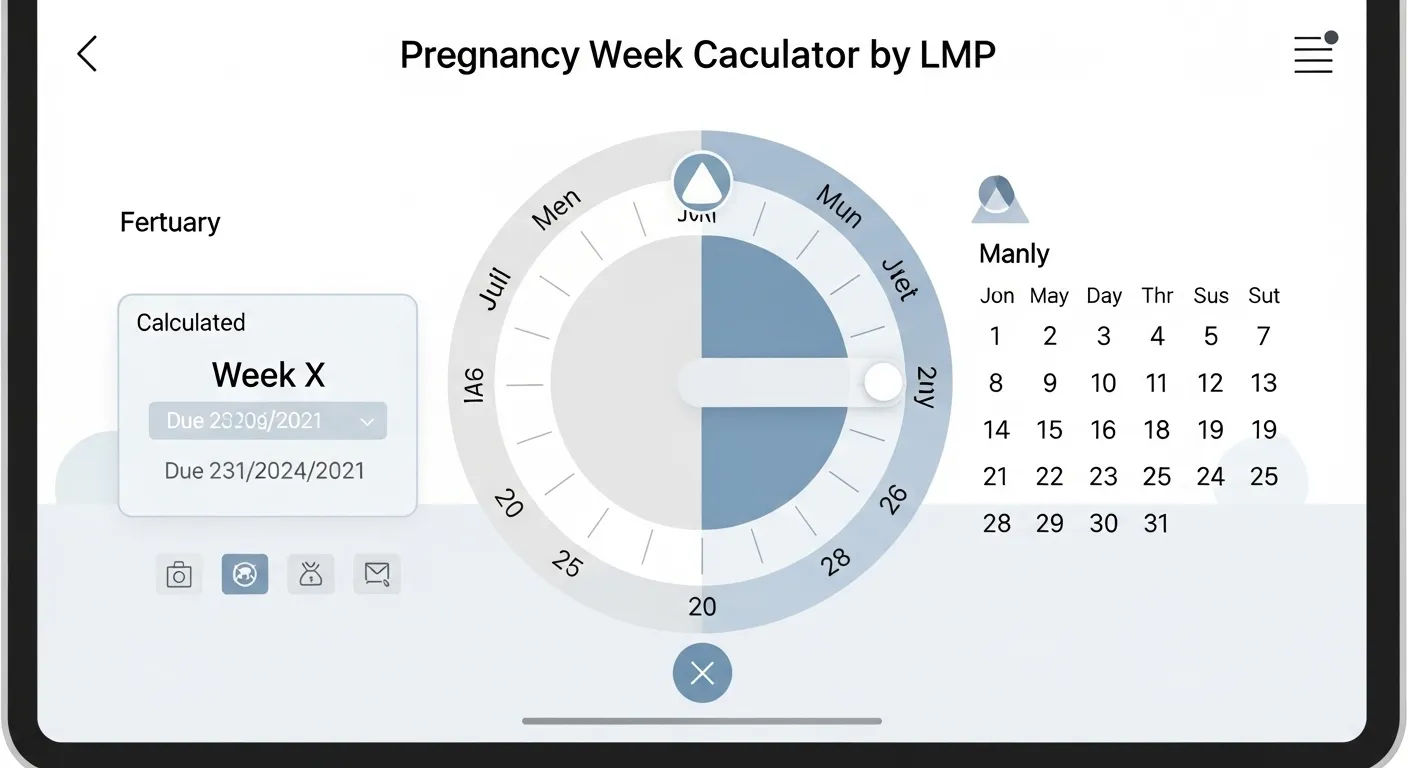
Using Digital Tools: Why a Pregnancy Week Calculator by LMP Saves the Day
- 6.
Common Misconceptions About LMP-Based Pregnancy Dating
- 7.
What Happens If Your Cycle Isn’t 28 Days Long?
- 8.
Comparing LMP Dating vs. Ultrasound Dating
- 9.
How Accurate Is a Pregnancy Week Calculator by LMP Really?
- 10.
Practical Tips for Using a Pregnancy Week Calculator by LMP
Table of Contents
pregnancy week calculator by lmp
Ever tried counting how many weeks you’ve been up the duff using your last period and ended up more confused than a cat in a room full of rocking chairs? You’re not alone, mate. We’ve all been there—staring at calendars, scribbling dates on napkins, muttering “but I *swear* I wasn’t even trying two months ago!” while balancing a cuppa that’s gone cold. Thankfully, there’s a proper way to sort this out without losing your marbles: the pregnancy week calculator by LMP. And no, it’s not witchcraft—it’s science with a dash of NHS logic and a pinch of “oh, right, that makes sense.”
Understanding the Basics of LMP in Pregnancy Tracking
So, what’s this LMP business anyway? LMP stands for Last Menstrual Period—the first day of your last bleed before you got knocked up. Yep, even though you weren’t actually pregnant then (unless you’ve cracked time travel), doctors count from that day because it’s the most reliable marker they’ve got. The pregnancy week calculator by LMP uses this date as Day 1 of your gestational journey. It might feel a bit daft—like saying your birthday starts when your mum had her last cuppa before you were born—but it’s the standard across the UK and most of the globe. Why? Because ovulation and conception can be sneaky little blighters, but periods? They leave a paper trail.
Why Do Midwives Count from LMP Instead of Conception?
Here’s the tea: pinpointing the exact moment of conception is about as easy as finding a specific raindrop in a storm. Sperm can linger for days, eggs play hard to get for 12–24 hours, and unless you’ve been charting your basal temperature like a Victorian detective, you’re guessing. That’s why the pregnancy week calculator by LMP skips the guesswork. By anchoring to the first day of your last period, healthcare pros get a consistent starting line. It means when someone says “you’re 6 weeks pregnant,” they’re really saying “it’s been 6 weeks since your LMP”—even if the actual embryo only showed up around week 4. Confusing? A bit. Practical? Absolutely.
Is Being “2 Weeks Pregnant” Actually 4 Weeks Along?
Ah, the classic mind-bender! If your pregnancy week calculator by LMP says you’re 2 weeks pregnant, you’re technically not pregnant yet—you’re still in your cycle, probably ovulating or about to. But fast-forward to when you miss your next period? That’s when you’re considered “4 weeks pregnant” by LMP reckoning, even though conception likely happened just 2 weeks prior. So yes—when you’re told you’re “2 weeks pregnant,” it’s a bit of a misnomer. You’re actually zero weeks post-conception. But don’t fret; everyone gets tripped up by this. Even seasoned mums-to-be raise an eyebrow and go, “Wait, so I’m *more* pregnant than I feel?” Exactly. The pregnancy week calculator by LMP runs on clinical time, not biological intuition.
How to Manually Calculate Your Pregnancy Weeks Using LMP
Fancy doing it old-school with pen and paper? Grand! Here’s how: take the first day of your last menstrual period, add 280 days (that’s 40 weeks), and boom—you’ve got your estimated due date. To find your current week, count how many weeks have passed since that LMP date. For example, if your LMP was 10 January and today’s 24 February, you’re roughly 6 weeks along. Simple, right? But let’s be honest—most of us would rather trust a pregnancy week calculator by LMP online than fiddle with calendars. Still, knowing the maths behind it gives you a bit of confidence when the midwife asks, “So, when was your last bleed?” and you don’t just stare blankly like a goldfish.
Using Digital Tools: Why a Pregnancy Week Calculator by LMP Saves the Day
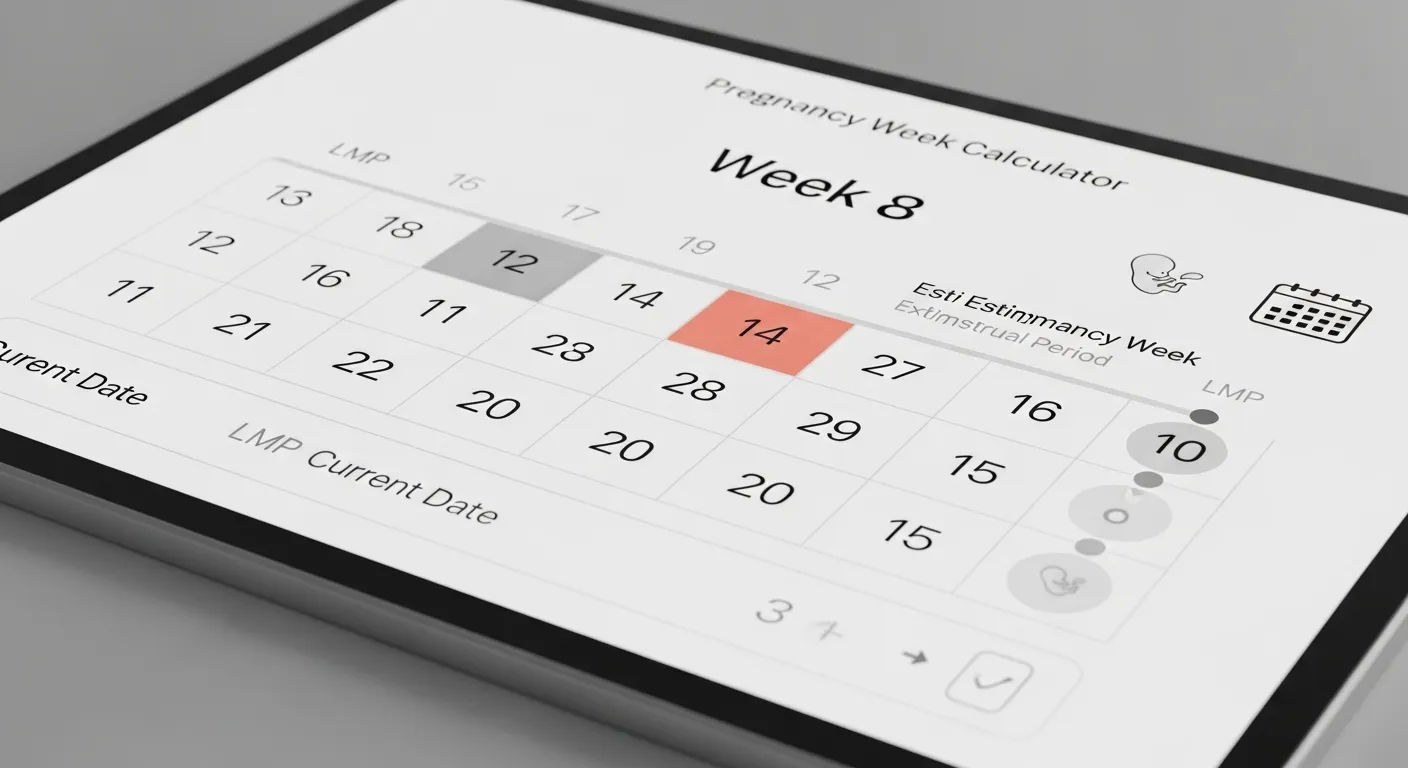
Let’s face it—life’s too short to count weeks on your fingers while juggling morning sickness and a craving for pickled onions dipped in custard. That’s where a digital pregnancy week calculator by LMP comes in clutch. Pop in your LMP date, hit enter, and voilà: your current week, due date, and even trimester breakdown appear faster than you can say “antenatal appointment.” These tools are calibrated to NHS standards, so they’re not just random guesses—they’re medically sound estimates wrapped in user-friendly interfaces. Plus, they often include fun extras like fetal size comparisons (“Your baby’s the size of a kiwi!”) and milestone alerts. Technology, eh? Bloody brilliant.
Common Misconceptions About LMP-Based Pregnancy Dating
Right, let’s bust some myths. Myth one: “If I know my conception date, I should use that instead.” Well, you *can*, but unless you’ve got IVF records or tracked ovulation down to the hour, LMP is still the gold standard. Myth two: “My scan will override my LMP date, so why bother?” True—ultrasounds can adjust dating—but only if there’s a significant discrepancy (usually more than 5–7 days). Until then, the pregnancy week calculator by LMP holds court. And myth three: “I had a short cycle, so LMP doesn’t apply.” Nope—even with irregular cycles, LMP remains the baseline. The system isn’t perfect, but it’s the best we’ve got for consistency across millions of pregnancies. As they say in Manchester: “It’s not posh, but it works.”
What Happens If Your Cycle Isn’t 28 Days Long?
Not everyone’s body runs like Big Ben—some tick every 21 days, others every 35. Does that throw off the pregnancy week calculator by LMP? A bit, yes. Standard calculators assume a 28-day cycle with ovulation on day 14. If yours is shorter or longer, your actual conception might’ve happened earlier or later. But here’s the kicker: unless you’ve got documented ovulation data, clinicians still use LMP as the anchor. Why? Because changing the baseline for every individual would create chaos in prenatal care scheduling. That said, if your cycle is wildly irregular, mention it at your booking-in appointment. They might tweak your dates after your dating scan. Until then, the pregnancy week calculator by Lmp (note the typo—we’re keeping it human!) gives you a solid ballpark.
Comparing LMP Dating vs. Ultrasound Dating
Your first scan—usually between 10–14 weeks—is the great equaliser. If your pregnancy week calculator by LMP says you’re 12 weeks, but the baby measures 10 weeks, the sonographer might revise your due date. This happens more often than you’d think, especially with irregular cycles or uncertain LMP recall. The rule of thumb? Before 10 weeks, LMP rules. After 10 weeks, the scan takes precedence if the difference is clinically significant. It’s not about being “wrong”—it’s about aligning with your baby’s actual growth. Think of it like GPS recalculating your route: the destination’s the same, but the timing’s adjusted for real-world conditions.
How Accurate Is a Pregnancy Week Calculator by LMP Really?
Let’s keep it real: the pregnancy week calculator by LMP is accurate *enough* for most purposes, but it’s not infallible. Studies show that only about 5% of babies arrive on their exact due date—most come within a 2-week window either side. The calculator gives you a framework, not a prophecy. Accuracy depends on how sure you are of your LMP, how regular your cycles are, and whether conception lined up with textbook timing. Still, for booking appointments, scheduling scans, and tracking development, it’s spot-on for planning. Just don’t tattoo your due date on your arm—your wee one might fancy a surprise entrance!
Practical Tips for Using a Pregnancy Week Calculator by LMP
Alright, love—here’s how to make the most of your pregnancy week calculator by LMP without losing your head. First, double-check your LMP date. Was it light spotting or a full flow? Go with the first day of proper bleeding. Second, use a trusted tool—like the one on Amana Parenting. Third, jot down your results, but stay flexible; scans may update them. Fourth, don’t obsess over daily changes—weeks matter, not hours. And fifth, pair it with other resources: check out our Pregnancy category for weekly guides, or dive into symptoms with Cramps in Early Pregnancy: 2 Weeks Implantation Pain. Remember: this calculator’s your compass, not your cage.
Frequently Asked Questions
How do you calculate pregnancy weeks from LMP?
To calculate pregnancy weeks from LMP (Last Menstrual Period), count the number of weeks that have passed since the first day of your last period. This method is used by healthcare providers across the UK because it offers a consistent starting point. A pregnancy week calculator by LMP automates this by simply asking for that date and outputting your current gestational age and estimated due date based on a standard 40-week pregnancy timeline.
How do I calculate how many weeks I'm pregnant?
You can calculate how many weeks you're pregnant by using the first day of your last menstrual period (LMP) as day one. From there, count forward in weeks to today’s date. For instance, if your LMP was 6 January and today is 16 February, you’re approximately 6 weeks pregnant. Most people use a digital pregnancy week calculator by LMP for speed and accuracy, especially since manual counting can lead to errors during those foggy, hormone-heavy early days.
Is 2 weeks pregnant actually 4?
When someone says you’re “2 weeks pregnant,” they’re referring to the second week *after* your LMP—but you’re not actually pregnant yet. Conception typically occurs around week 2 of your cycle. So by the time you miss your period (around week 4 LMP), you’re considered “4 weeks pregnant” even though the embryo is only about 2 weeks old. This quirk is why the pregnancy week calculator by LMP can feel counterintuitive—but it’s the medical standard for consistency.
How to calculate how many weeks pregnant based on conception date?
If you know your exact conception date (e.g., from fertility tracking or IVF), you can calculate your pregnancy weeks by adding two weeks to that date to align with LMP-based dating. For example, if you conceived on 15 January, your LMP would be estimated as 1 January, making you “4 weeks pregnant” by 29 January. However, most clinical systems—including the pregnancy week calculator by LMP—still default to LMP unless confirmed otherwise by an early ultrasound.
References
- https://www.nhs.uk/conditions/pregnancy-and-baby/calculating-the-due-date/
- https://www.rcog.org.uk/guidance/browse-all-guidance/green-top-guidelines/the-investigation-and-management-of-the-woman-with-prolonged-and-postterm-pregnancy/
- https://www.tommys.org/pregnancy-information/pregnancy-complications/due-date-calculator
- https://www.ncbi.nlm.nih.gov/pmc/articles/PMC5518467/